
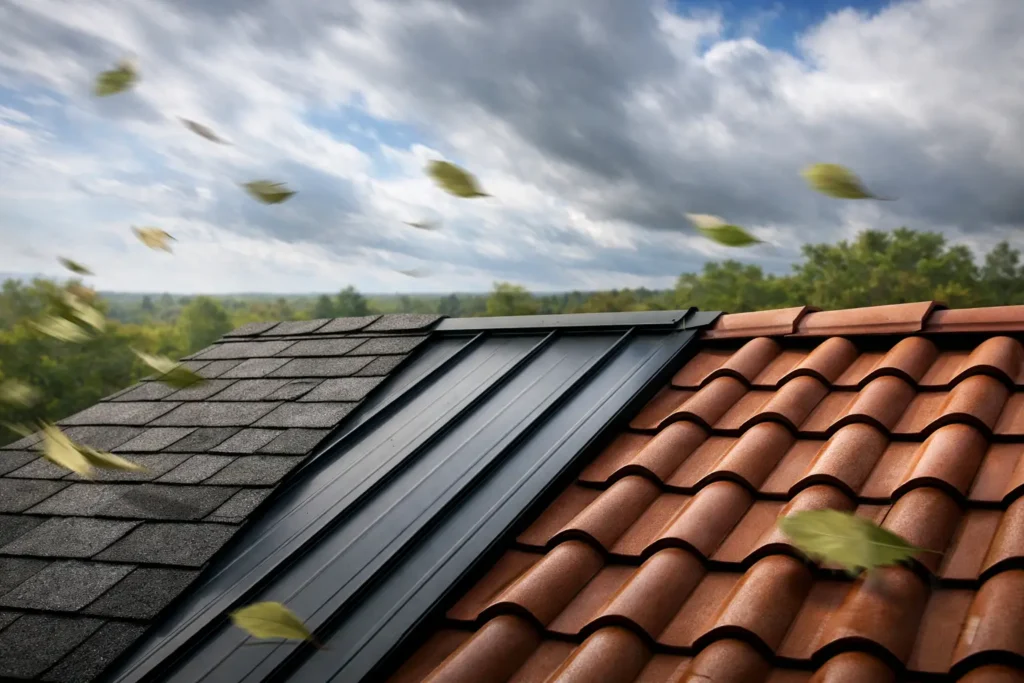
A roof can look perfectly fine on a calm day and still be one hard windstorm away from trouble. In Southern Alberta, that matters. If you are comparing the best roofing materials for wind, the right answer is not just about product labels. It comes down to material strength, fastening method, roof design, and how well the system is installed for local conditions.
Homeowners often ask for the single strongest option, but roofing is rarely that simple. A material that performs well in high winds on one home may not be the best fit for another. Budget, slope, maintenance expectations, attic ventilation, and the age of the existing roof deck all affect the decision. The goal is to choose a roof system that holds up well, protects your home, and gives you confidence when the weather turns.
What makes a roof good in high winds?
Wind does not attack a roof evenly. It puts the most pressure on edges, corners, and ridge areas, where uplift forces are strongest. That means a roof’s wind resistance depends on more than the shingles or panels you can see from the street. Underlayment, starter strips, flashing, fasteners, decking condition, and ventilation all play a part.
The shape of the roof matters too. A simple roofline with fewer valleys and transitions usually gives wind fewer weak points to exploit. Overhangs, old flashing details, and worn sealant can all become problem areas long before the main field of the roof fails.
This is why professional installation matters so much. Even the best material can underperform if it is installed without the right fastening pattern or if damaged decking is left underneath. For homeowners, that means the smartest question is not just what material is strongest, but what roof system is strongest for this house.
Best roofing materials for wind: how the main options compare
Architectural asphalt shingles
Architectural asphalt shingles are one of the most common choices for residential homes, and for good reason. They offer solid wind performance, broad style options, and a price point that works for many families. Compared with basic 3-tab shingles, architectural shingles are thicker, heavier, and generally rated for better wind resistance.
For many homes, this is the practical middle ground. A quality architectural shingle installed correctly can handle strong weather while keeping replacement costs more manageable than premium systems. It also tends to blend well with neighborhood aesthetics and can boost curb appeal without pushing the budget too far.
That said, not all asphalt shingles perform the same way. Lower-grade products may have weaker adhesive strips or lighter construction, which can make them more vulnerable in repeated wind events. If you are choosing asphalt in a windy area, product quality and installation details matter just as much as the category itself.
Metal roofing
Metal roofing is often one of the strongest contenders when homeowners ask about wind resistance. Properly installed metal panels or metal shingles can offer excellent performance in high-wind areas, and they also bring long service life and low maintenance appeal.
One reason metal performs well is that it is mechanically attached and designed as a more continuous surface than many shingle systems. It also sheds snow and water efficiently, which is useful in climates that see a mix of weather extremes. For homeowners thinking long term, metal can be an attractive investment because it combines durability with a clean, modern look.
The trade-off is cost. Metal roofing usually requires a higher upfront investment than asphalt, and installation precision is critical. If panel layout, fastening, or flashing details are off, even a premium metal roof can become vulnerable. Noise is another concern some homeowners raise, though with proper roof assembly and insulation, it is often less of an issue than people expect.
Impact-resistant shingles
Impact-resistant shingles deserve special attention in windy regions because windstorms often bring hail and flying debris with them. These shingles are typically built to resist cracking and surface damage better than standard asphalt products, which can make them a strong option for homeowners dealing with more than one kind of severe weather risk.
They are not automatically the best roofing materials for wind in every case, but they can be a smart upgrade when storms tend to come with multiple threats. If your concern is not only uplift but also the damage caused by branches, hail, or debris, impact-resistant products can improve overall roof resilience.
The main consideration is value. They cost more than standard shingles, so the benefit depends on your home’s exposure and your long-term plans. For some households, the extra protection is worth it. For others, a high-quality architectural shingle may be enough.
Synthetic roofing products
Synthetic roofing materials are made to mimic slate, wood shake, or other premium looks while reducing weight and improving performance. Some synthetic products are engineered for strong wind resistance and can be a good fit for homeowners who want a more distinctive appearance without the structural demands of natural materials.
Performance varies widely by manufacturer, so this category requires a careful look at product ratings and warranty details. A well-made synthetic roof can offer impressive durability, but it is not a shortcut around installation quality. As with every other option, the material only performs as well as the system built around it.
Materials that may be less ideal in very windy areas
Natural wood shake and older 3-tab asphalt shingles are usually less attractive choices where strong wind is a regular concern. Wood can look beautiful, but it requires more maintenance and can be more vulnerable to weathering over time. Basic 3-tab shingles are generally lighter and less wind-resistant than architectural alternatives.
That does not mean these materials never work. It means they often offer fewer advantages for homeowners who are prioritizing wind performance and long-term durability.
Why installation matters as much as the material
When a roof fails in wind, the visible material often gets blamed first. In many cases, though, the deeper issue is installation. Poor nailing patterns, missing starter strips, weak flashing, or deteriorated roof decking can all lead to blow-offs and leaks.
A roof designed for local weather should account for more secure attachment at vulnerable areas, solid deck condition, and proper ventilation. If the attic is poorly ventilated, excess heat and moisture can shorten the life of roofing materials and weaken the system over time. If flashing is not properly integrated, wind-driven rain can get into places homeowners never see until damage appears indoors.
That is why roof replacement is not just a material purchase. It is a craftsmanship decision. The value comes from how the whole system is built to protect the home.
Choosing the best roofing materials for wind in Southern Alberta
Southern Alberta homeowners know that wind is not an occasional inconvenience. It is part of life. That makes roof selection a practical decision, not just a style choice.
For many homes, architectural asphalt shingles offer the best balance of cost, appearance, and dependable wind performance. They are often the right fit for homeowners who want strong protection without stepping into a premium price range.
For homeowners focused on maximum durability and long-term value, metal roofing is often worth serious consideration. It tends to perform very well in high winds and can be an excellent option when installed by an experienced crew.
If your home sits in a more exposed area or you have dealt with repeated storm damage, impact-resistant shingles may also deserve a closer look. They can provide broader storm protection, especially when hail is part of the picture.
The right answer depends on your home, your budget, and how long you plan to stay in the property. A roof that works well for a starter home may not be the same roof that makes sense for a forever home.
What homeowners should ask before deciding
Before choosing a roofing material, ask how the product is rated for wind, how it will be installed on your roof design, and whether the decking and ventilation need upgrades. Ask what kind of maintenance to expect, how the material performs through seasonal temperature swings, and what kind of lifespan you can realistically expect in local conditions.
A good contractor should be able to explain the trade-offs clearly. That includes price, durability, appearance, repairability, and how the material fits your home’s structure. Straight answers matter, especially when the roof is one of the biggest protective systems your home has.
At HighLow Roofing & Exteriors, that is the approach we believe in – honest guidance, quality workmanship, and roofing solutions that make sense for the way homes are actually exposed to weather here.
If you are weighing your options, the best next step is to look at your roof as a full system, not just a product sample. The right material should do more than survive the next windstorm. It should help your home stay protected, attractive, and dependable for years to come.