
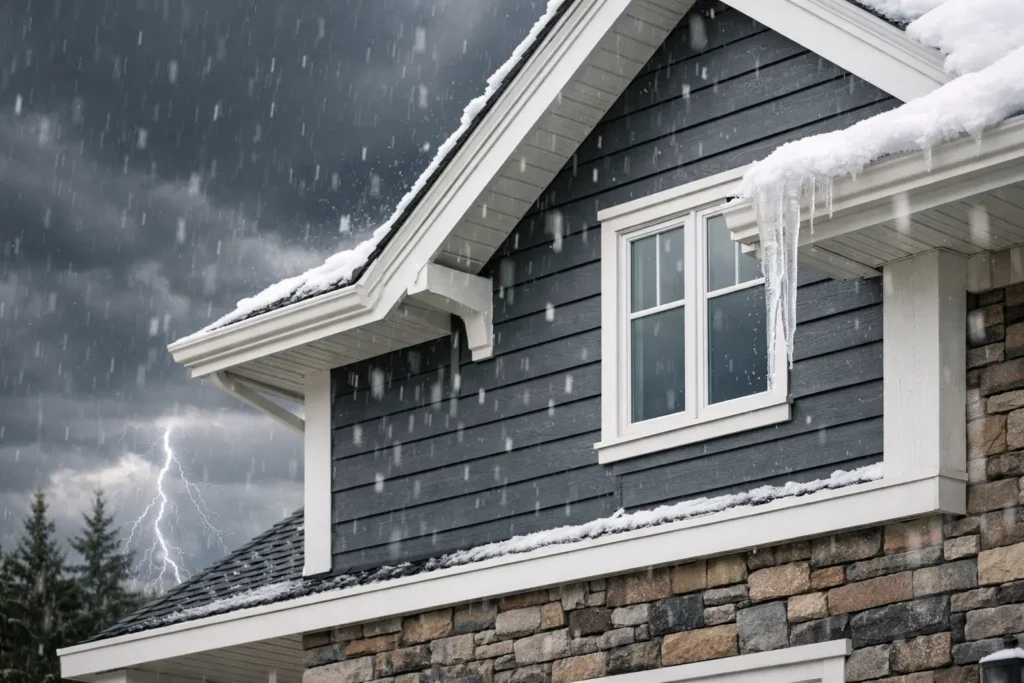
When a Chinook swings temperatures fast or a hailstorm rolls across Southern Alberta, weak siding gets exposed in a hurry. Choosing the best siding for harsh weather is not really about picking the most expensive product on the board. It is about finding the material that stands up to wind, moisture, impact, and freeze-thaw cycles without turning your exterior into a maintenance project.
For homeowners, that decision affects more than appearance. Good siding protects the wall assembly, helps control moisture, supports energy performance, and keeps repair costs from stacking up year after year. The right choice can also make your home easier to maintain and more attractive from the street, which matters whether you plan to stay long term or protect resale value.
What harsh weather actually demands from siding
Not all bad weather stresses a home in the same way. In this region, siding has to handle more than one kind of pressure. Strong wind can loosen poorly installed panels. Hail can crack brittle materials. Snow and ice test water resistance around seams, trim, and lower wall areas. Big temperature swings cause expansion and contraction, which can reveal weaknesses over time.
That is why the best siding for harsh weather is rarely just the one with the highest advertised durability rating. Installation quality matters just as much as the product itself. Even a strong siding material can fail early if it is not properly fastened, flashed, or detailed around windows, doors, corners, and rooflines.
Best siding for harsh weather: the top options
For most homeowners, the strongest contenders are fiber cement, engineered wood, steel, and quality insulated vinyl. Each can work well, but they perform differently depending on your priorities.
Fiber cement siding
Fiber cement is one of the most dependable choices for homes exposed to harsh weather. It resists rot, pests, and fire, and it generally holds up well against moisture and temperature swings. It also has a solid, substantial feel that many homeowners like, especially if they want the look of painted wood without the same level of upkeep.
Its biggest strength is balance. Fiber cement performs well in wind and cold, and it is less likely than some lighter materials to warp when temperatures swing. It also offers strong curb appeal because it comes in styles that fit both traditional and modern homes.
The trade-off is weight and installation complexity. Fiber cement needs skilled installation, proper clearances, and careful moisture detailing. If it is cut or installed carelessly, you can lose some of the performance you paid for. It also usually costs more than vinyl.
Engineered wood siding
Engineered wood has become a strong option for homeowners who want warmth and character without choosing traditional wood siding. It is designed to resist moisture and impact better than natural wood, and many products come with durable factory-applied finishes.
In areas with mixed weather, engineered wood can be a smart middle ground. It tends to be lighter than fiber cement, and in some cases it offers better impact resistance during hail events. It also gives a home a more custom look than standard vinyl.
Still, product quality matters a great deal. Lower-grade options or poor installation can lead to moisture problems over time. Homeowners considering engineered wood should focus on the full system, not just the panel itself. Trim details, caulking strategy, flashing, and ground clearance all play a role in long-term performance.
Steel siding
If your top concern is durability, steel deserves serious attention. It is strong, non-combustible, and highly resistant to many of the issues that wear out other siding materials. It performs especially well in high wind conditions and is not vulnerable to rot or insect damage.
Steel can be an excellent fit for homeowners who want a long-lasting exterior with minimal maintenance. It also works well on homes where a clean, crisp appearance is part of the design.
The main drawback is impact aesthetics. While steel is tough, severe hail can sometimes dent it, even if it does not crack or break. For some homeowners, a dent is easier to live with than a fractured panel. For others, appearance matters enough that this becomes a deciding factor. Steel can also be noisier during heavy rain or hail if the wall system is not assembled well.
Insulated vinyl siding
Vinyl siding is common for a reason. It is affordable, widely available, and low maintenance. When upgraded to a thicker, insulated product and installed correctly, it can perform better in harsh weather than many people expect.
The benefit here is value. Quality insulated vinyl can improve appearance, reduce minor wall waviness, and offer decent weather resistance at a lower cost than fiber cement or steel. It will not ask for painting, and it is relatively easy to keep clean.
But this is where quality matters most. Thin vinyl is more vulnerable to cracking in extreme cold and may not handle impact as well as stronger alternatives. If a homeowner is looking for the best siding for harsh weather with long-term durability as the main goal, standard low-cost vinyl usually is not the first recommendation.
Materials that need more caution
Traditional wood siding can still look beautiful, but in harsh climates it asks for more maintenance and closer monitoring. Moisture management becomes critical, and repainting or refinishing can become a regular expense. Stucco also has strengths, but freeze-thaw conditions can be tough on it if the assembly is not perfectly suited to the home and climate.
That does not mean these materials never work. It means they are less forgiving. For most homeowners looking for straightforward protection and lower maintenance, there are usually better-fit options.
How to choose the right siding for your home
The right answer depends on what kind of risk you are trying to reduce. If hail is your biggest worry, impact resistance may lead the conversation. If long winters and moisture are the concern, water management details and material stability matter more. If budget is tight, it may make sense to choose a solid mid-range product and invest more in proper installation and trim work rather than stretch for a premium material installed poorly.
Home style matters too. Some products suit certain architectural looks better than others. A home can be highly durable and still feel visually dated if the siding profile, reveal, and color are not chosen carefully. The best result is when performance and curb appeal are considered together.
This is also why a full exterior assessment helps. Siding does not work alone. Gutters, soffit, fascia, roof edges, and flashing all influence how well an exterior handles weather. If one part is failing, another part often starts taking on water or wear it was never meant to handle.
Why installation matters as much as the material
Homeowners often compare siding brands and overlook the bigger issue. Weather resistance is built at installation. That includes the house wrap, moisture barrier strategy, flashing tape, corner details, starter placement, fastening method, and clearances from roofing, decks, and grade.
A good product installed the wrong way can become a recurring repair problem. A well-matched product installed by an experienced exterior contractor usually delivers better long-term value than chasing a premium label alone. In a climate with strong wind, hail, snow, and fast temperature changes, details are not optional. They are what make the system work.
That is one reason many homeowners prefer working with one contractor who understands how the whole exterior performs together. At HighLow Roofing & Exteriors, that practical, whole-home approach matters because siding decisions are rarely just about siding.
So what is the best siding for harsh weather?
If you want the short answer, fiber cement is often the strongest all-around choice for homeowners who want durability, curb appeal, and reliable long-term performance. Steel is a close contender when strength and low maintenance matter most. Engineered wood is appealing when you want a more natural look with solid resilience. Insulated vinyl can still be a good fit when value and low upkeep lead the decision.
There is no single best option for every home. The right siding depends on your budget, your home design, your maintenance expectations, and the kind of weather exposure your property gets most often.
A good siding decision should leave you feeling more confident when the forecast turns rough, not wondering what the next storm will cost. If you are weighing options, start with the material that fits your climate, then make sure the installation plan is just as strong as the product you choose.