
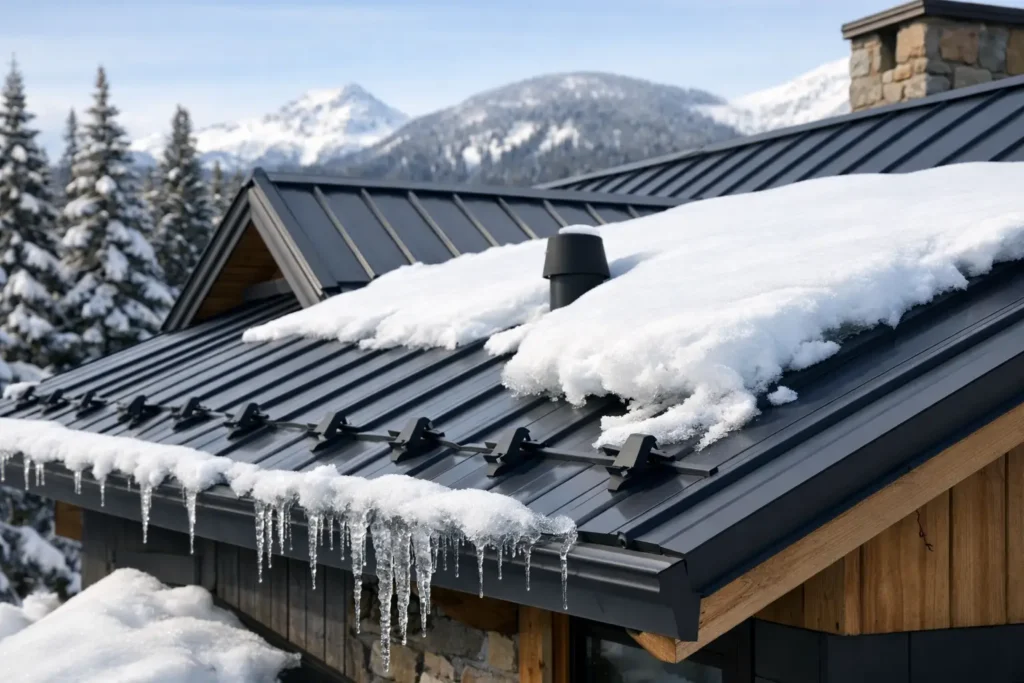
A roof in Southern Alberta has to do more than look good from the street. It has to stand up to heavy snow, wind, freeze-thaw cycles, and long winters that test every weak spot. That is why metal roofing for cold climates gets so much attention from homeowners who are thinking beyond the next season and looking at the next few decades.
Metal roofing has earned a strong reputation in winter-prone regions, but that does not mean every metal roof performs the same way. The material matters, the profile matters, and most of all, the installation matters. In cold weather, small details can make the difference between a roof that performs reliably and one that creates ongoing headaches.
Why metal roofing for cold climates makes sense
One of the biggest advantages of metal roofing is how it handles snow. Unlike many traditional roofing materials, metal has a smooth surface that helps snow slide off more easily when conditions allow. That can reduce the amount of weight sitting on the roof for long periods, which is especially valuable after repeated storms.
Metal also performs well during freeze-thaw cycles. In cold climates, moisture can work its way into vulnerable roofing materials, freeze overnight, expand, and gradually cause damage. A properly installed metal roof is less prone to that kind of wear because it sheds water efficiently and does not absorb moisture the way some materials can.
Durability is another major reason homeowners consider metal. Good metal roofing systems are built to handle tough weather, including hail, strong winds, and rapid temperature swings. For many homeowners, that long service life helps offset the higher upfront cost.
There is also a maintenance benefit. When a roof is installed correctly, metal typically requires less routine attention than many people expect. That does not mean no maintenance at all, but it can mean fewer concerns about cracking, curling, or premature material breakdown.
The biggest winter advantages homeowners care about
For most families, the question is not whether metal sounds impressive on paper. The question is whether it makes everyday life easier and protects the home better. In cold climates, the answer is often yes.
A well-built metal roof can help reduce the chance of standing snow and trapped moisture, especially on roof designs that encourage runoff. It can also support better attic performance when combined with proper ventilation and insulation. That matters because many winter roofing problems do not start on top of the roof. They start underneath it, when warm indoor air escapes, melts snow unevenly, and contributes to ice dam formation.
Another practical advantage is lifespan. If you plan to stay in your home for a long time, metal can be a strong investment because replacement cycles are typically longer. Homeowners who are tired of repeated repair costs often appreciate the idea of installing one roofing system designed to last.
What matters more than the material alone
Metal is a strong roofing option, but it is not a magic fix for every home. Performance depends on the full system.
Installation quality
In cold climates, installation quality is everything. Flashing details, fastener placement, underlayment selection, ventilation strategy, and edge protection all play a role in how the roof performs through winter. A poorly installed metal roof can leak, develop noise issues, or struggle with snow and ice management just like any other roof.
This is why local experience matters. A contractor who understands regional weather knows that cold-climate roofing is not just about covering the deck with metal panels. It is about building a system that handles wind-driven snow, temperature swings, and seasonal moisture movement.
Underlayment and ice protection
The metal panels are only part of the story. Beneath them, the underlayment and ice-and-water protection help defend the home from moisture intrusion. In areas with snow buildup and ice concerns, these layers become even more important around eaves, valleys, penetrations, and other vulnerable areas.
If a homeowner compares quotes based only on visible materials, it is easy to miss where one roofing system is stronger than another. The hidden components often make a major difference in long-term performance.
Ventilation and insulation
A metal roof cannot correct attic problems by itself. If the attic has poor insulation or unbalanced ventilation, heat loss can still create uneven snow melt and refreezing at the roof edge. That is where ice dams often begin.
A good contractor looks at the roof as part of the whole home exterior system. Sometimes the right recommendation includes attic improvements along with the roof replacement, because solving the real problem is more important than simply changing materials.
Common concerns about metal roofs in winter
Homeowners usually have a few understandable questions before making the switch.
One concern is noise. Many people imagine a metal roof sounding loud during storms, but that image usually comes from barns or exposed structures, not modern residential assemblies. When metal roofing is installed over a proper roof deck with solid underlayment and attic insulation, the sound level is often far less dramatic than people expect.
Another concern is snow sliding off too quickly. This can be a real issue depending on the roof design, slope, and areas below the eaves. Snow retention systems may be recommended to control how snow releases, especially above walkways, driveways, decks, or entry points. This is a good example of why one-size-fits-all advice does not work. Snow shedding can be a benefit, but it needs to be managed properly.
Cost is also part of the conversation. Metal roofing usually costs more upfront than asphalt. That is a real trade-off, and it is worth discussing honestly. For some homeowners, the longer lifespan, lower maintenance demands, and strong weather performance make the investment worthwhile. For others, budget may point them toward a different roofing system. The right answer depends on your goals, the age of the home, and how long you plan to stay there.
Choosing the right metal roof profile
Not all metal roofs look or perform the same. Some systems use exposed fasteners, while others use concealed fasteners. Some profiles are designed more for agricultural or utility buildings, while others are built specifically for residential homes.
For cold climates, profile selection should balance durability, water management, appearance, and budget. A lower-cost panel may be suitable in some situations, but homeowners should understand the maintenance expectations and long-term trade-offs. A premium system may offer cleaner lines and stronger weather protection, but it comes with a higher initial investment.
This is where clear communication from your contractor matters. You should know what type of system is being proposed, why it fits your home, and what kind of performance you can realistically expect.
When metal roofing is a smart choice
Metal roofing is often a strong fit for homeowners who want long-term value, plan to stay in the home, and want better performance in severe weather. It also appeals to people who want a clean, updated exterior with less ongoing maintenance.
It may be especially worth considering if your current roof has struggled with snow load, recurring repairs, weather-related wear, or ice dam concerns. In many cases, upgrading to metal is not just about appearance. It is about improving protection and reducing future stress.
At the same time, the smartest roofing decisions are never made by material alone. Roof shape, attic condition, drainage, ventilation, and installation quality all need to be part of the conversation. A trustworthy contractor will walk you through those details in plain language, not pressure you into a product that is not right for your home.
For homeowners in tough winter regions, a roof should deliver peace of mind when the forecast turns ugly. If you are weighing your options, metal roofing for cold climates is worth a serious look, especially when it is backed by careful planning, quality materials, and craftsmanship that is built for the weather you actually live in.