
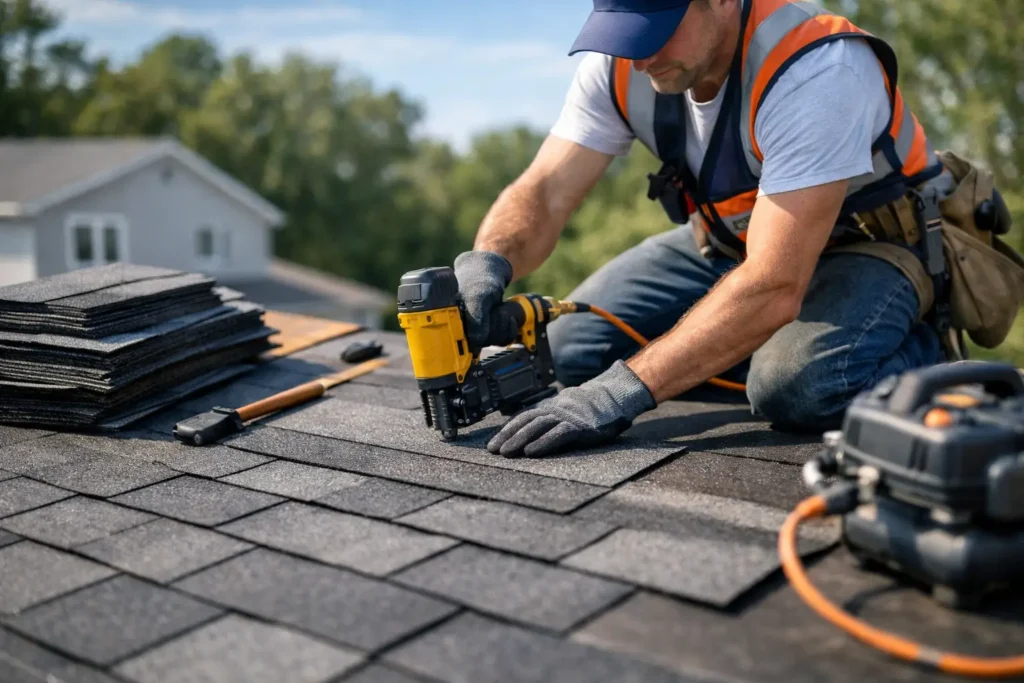
A roof usually starts asking for attention long before water shows up on the ceiling. Maybe shingles are curling after another Southern Alberta winter. Maybe granules are piling up in the gutters. Maybe the roof simply looks tired and drags down the whole house. When homeowners start thinking about asphalt shingle roof installation, they are usually not just buying shingles. They are protecting the structure, improving curb appeal, and making sure the next windstorm or freeze-thaw cycle does not turn into an expensive surprise.
Asphalt shingles remain one of the most practical roofing choices for residential homes because they balance cost, appearance, durability, and repairability. But the performance of a shingle roof depends far less on how the bundle looks in the yard and far more on how the system is installed. Materials matter, but workmanship decides whether that roof holds up for years or starts showing problems early.
What asphalt shingle roof installation really includes
Homeowners sometimes picture installation as a simple swap – old roof off, new shingles on. In reality, a proper asphalt shingle roof installation is a full system process. The shingles are the outermost layer, but they rely on everything beneath and around them to do their job.
That starts with tear-off and inspection. Once the old roofing is removed, the roof deck can be checked for soft spots, moisture damage, sagging, and any areas that need replacement before new materials go down. Skipping that step can hide structural issues that shorten the life of the new roof from day one.
From there, underlayment helps create a secondary moisture barrier, especially in vulnerable areas. Ice and water protection may be applied where leaks are more likely, such as eaves, valleys, and around penetrations. Flashing around chimneys, walls, vents, and valleys is also critical. If those details are poorly handled, even premium shingles can fail to keep water out.
Ventilation is another part homeowners often overlook. A roof that cannot breathe properly can trap heat and moisture in the attic, which affects energy performance and can wear out roofing materials faster. In a climate with strong seasonal swings, that detail matters more than many people realize.
Why installation quality matters more than the shingle brochure
There is a reason roofing estimates can vary, even when two contractors are quoting what sounds like the same product. Not every roof system is installed with the same level of care. The difference often shows up in the details homeowners do not see from the driveway.
Nailing patterns, starter strips, ridge cap installation, valley treatment, flashing integration, and ventilation balance all affect how the roof performs under wind, snow, and heavy rain. A roof can look neat from the ground and still have weaknesses built into it.
That is especially true in places like Lethbridge and across Southern Alberta, where roofs deal with strong winds, sudden weather changes, intense sun exposure, and winter conditions that test every layer of protection. A roofing system needs to be installed for the local climate, not just to pass a quick visual check.
There is also a long-term value piece here. A cheaper installation can feel attractive up front, but if it leads to leaks, premature wear, or ventilation problems, the savings disappear quickly. Good installation is not about adding extras for the sake of it. It is about doing the work once and doing it right.
The main stages of asphalt shingle roof installation
Every home has its own roof design, slope, and condition, but the general process follows the same path. Understanding that path helps homeowners ask better questions and know what a quality job should include.
Tear-off and deck inspection
A full replacement usually begins with removing the existing shingles and related components. This exposes the decking underneath so any rot, water damage, or weak sections can be identified. If the deck is compromised, installing over it only covers the problem.
Some roofs need very little deck repair. Others reveal issues near valleys, eaves, or around old penetrations. That is why honest communication during this stage matters. Homeowners deserve to know what was found, why it matters, and how it affects the project.
Underlayment and waterproofing details
Once the deck is ready, protective layers go on before shingles are installed. Underlayment acts as backup protection against wind-driven rain and moisture intrusion. In colder climates, ice and water shield in key areas helps reduce the risk of leaks caused by ice damming or water backup.
This stage is not flashy, but it is one of the reasons some roofs stay dry through hard weather while others do not. The shingle layer is important, but the hidden protection underneath often makes the difference during extreme conditions.
Flashing, ventilation, and shingle placement
Metal flashing is installed or replaced at valleys, walls, chimneys, skylights, and vent penetrations. These are some of the most leak-prone points on any roof, so detail work here has to be exact.
Then the shingles are laid according to manufacturer specifications and roof design. Proper alignment, fastening, exposure, and sealing all matter. Ridge ventilation and exhaust components are addressed as part of the full system, helping the attic and roof assembly perform the way they should.
Choosing the right shingles for your home
Not every asphalt shingle is the same, and the right choice depends on budget, style, and performance needs. For many homeowners, architectural shingles strike the best balance. They offer a more dimensional look than basic three-tab shingles and generally hold up better over time.
Color choice also matters more than people expect. A new roof changes the overall appearance of the house and can either modernize it or make it feel mismatched. The best choice usually works with the siding, trim, brick, and surrounding neighborhood rather than trying to stand out for the sake of it.
Warranty discussions are worth having too, but they should be viewed realistically. A warranty is valuable, but it does not replace proper installation. Materials can only perform as intended when the roof system is built correctly from the start.
Common mistakes that shorten roof life
Homeowners do not need to know every technical step, but it helps to understand where roofing jobs can go wrong. One common issue is poor ventilation planning. Another is inadequate flashing replacement, especially when crews try to reuse old components that should have been updated.
Improper nailing is another major problem. If shingles are overdriven, underdriven, or fastened outside the correct nailing zone, wind resistance and long-term performance suffer. Cheap shortcuts with underlayment or edge details can also create hidden vulnerabilities.
Timing can matter as well. Roofing in difficult weather is sometimes unavoidable, but rushed installation during poor conditions can affect sealing and workmanship. A dependable contractor will be straightforward about scheduling, weather delays, and what is needed to protect the home properly during the job.
How homeowners can evaluate a roofing contractor
A roofing project is a major investment, so trust matters. Homeowners should expect clear communication, a written scope of work, and a contractor who explains the roof as a system rather than just quoting a shingle color and price.
Ask what is included in tear-off, deck inspection, flashing replacement, ventilation review, and cleanup. Ask how unexpected deck repairs are handled. Ask whether the installation approach is suited to local weather conditions. These questions are not about being difficult. They are how you separate careful craftsmanship from a rushed job.
It also helps to work with a contractor who understands the broader exterior picture. Roofing does not operate in isolation. Gutters, soffit, fascia, and siding all play a role in how water moves off the house and how well the exterior holds up over time. A company that sees the whole system can often spot issues that a narrower scope might miss.
That practical, honest approach is what homeowners should expect from a local contractor. At HighLow Roofing & Exteriors, that means focusing on the roof’s real job – protecting the home, handling Alberta weather, and giving homeowners confidence that the work was done with care.
When roof replacement makes more sense than repair
Not every roof needs full replacement right away. Some issues can be repaired effectively, especially when damage is limited to a specific section. But there comes a point where repeated patching stops being cost-effective.
If shingles are brittle, curling, missing in multiple areas, or showing widespread wear, replacement may be the smarter investment. The same is true when leaks keep returning or when the roof has underlying deck or ventilation issues that repairs alone will not solve. A good estimate should help clarify that decision instead of pushing one option automatically.
For many homeowners, the real goal is peace of mind. They want to know the roof over their family, tenants, or investment property is built to last and not just patched together until the next storm tests it.
A well-planned asphalt shingle roof installation does more than freshen up a house. It gives the home a stronger first line of defense, supports long-term value, and removes a layer of uncertainty that no homeowner wants hanging overhead.