
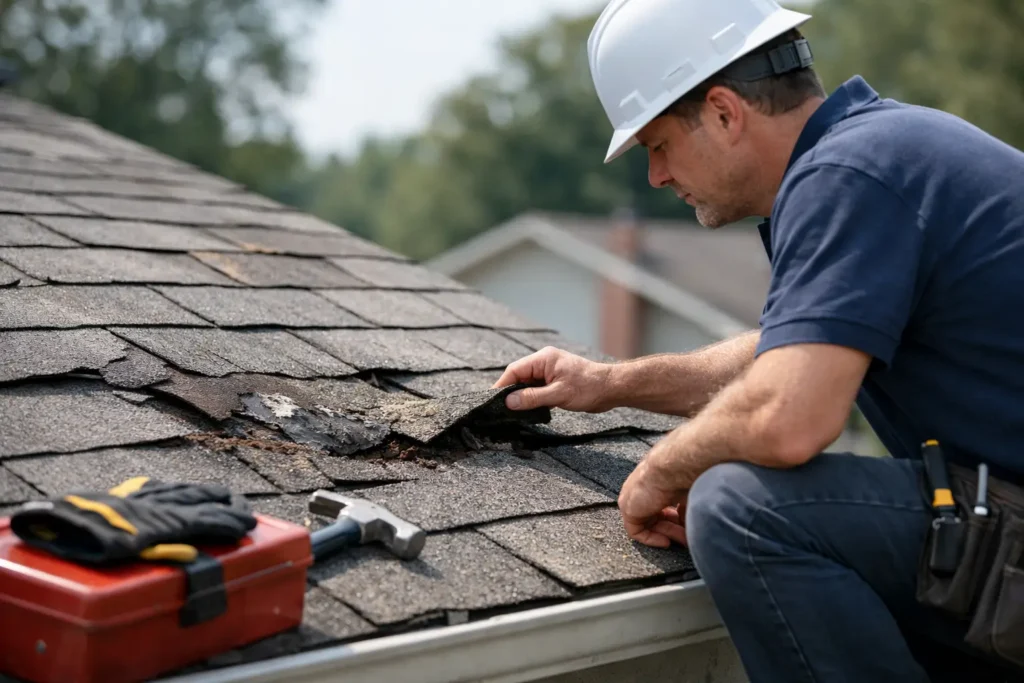
A roof usually does not fail all at once. It gives warnings first – some obvious, some easy to miss until water starts showing up where it should not. If you are wondering how to know if roof needs replacement, the right answer is not based on one stain, one missing shingle, or one windy day. It comes down to the roof’s age, the type of damage you are seeing, and whether repairs are still solving the real problem.
For homeowners in Lethbridge and Southern Alberta, that question matters even more. Strong winds, hail, snow load, freeze-thaw cycles, and long stretches of sun can all shorten a roof’s useful life. A roof that looks acceptable from the driveway may still be close to the point where repair money is better spent on replacement.
How to Know if Roof Needs Replacement or Repair
The biggest mistake homeowners make is assuming every roofing issue needs a full replacement, or the opposite – patching a worn-out roof year after year because the damage seems small. A good contractor looks at the full picture.
A localized issue on a newer roof can often be repaired. If a few shingles blew off after a storm, flashing pulled loose around a vent, or a small section was damaged by debris, a repair may be the practical option. But if your roof is older and problems are showing up in several areas, replacement often becomes the smarter long-term investment.
That is because roofing systems wear as a whole. Even if one leak seems minor, the surrounding shingles, underlayment, venting, and exposed roof penetrations may all be nearing the end of their service life. At that point, repeated repairs can add up without giving you real peace of mind.
Start With the Roof’s Age
Age is not the only factor, but it is one of the first things to consider. Most asphalt shingle roofs have an expected lifespan in a general range, not a fixed expiration date. Installation quality, attic ventilation, material grade, weather exposure, and maintenance all affect how long a roof lasts.
If your asphalt roof is approaching 15 to 25 years old, it deserves a closer look. Some roofs last longer, especially when they were installed well and have not taken serious storm damage. Others wear out earlier because of poor ventilation, repeated wind exposure, or hail impact.
Metal roofing tends to last longer than asphalt, but that does not mean it never needs replacement. Fasteners, seams, coatings, and flashing details can all deteriorate over time. The key point is simple: an aging roof with visible signs of wear should not be judged by appearance alone.
If you bought your home and do not know the roof’s age, a professional inspection can help you understand where it stands and whether you are looking at a repair cycle or a replacement timeline.
Visible Signs Your Roof May Be Worn Out
Some of the clearest replacement indicators can be seen from the ground. Others show up inside the home first.
Curling, cracking, or missing shingles are common warning signs on asphalt roofs. When shingles begin to curl at the edges or lose their seal, wind can catch them more easily. Cracking often means the material has dried out and become brittle. Missing shingles are not just a cosmetic problem – they expose the roof deck and underlayment to moisture and further damage.
Granule loss is another sign homeowners often overlook. If you notice shingle granules collecting in gutters or downspouts, that means the protective surface of the shingles is wearing away. A few granules are normal over time, but heavy loss usually points to an older roof or storm damage.
Dark streaks, patchy discoloration, and areas that look worn unevenly can also suggest that the roof is nearing the end of its reliable life. The issue is not always appearance. Uneven wear can mean certain slopes are taking more exposure than others, especially on homes that face strong sun and wind.
Inside the house, watch for water stains on ceilings, peeling paint near rooflines, damp insulation, moldy attic smells, or light coming through the roof boards. A leak does not always mean the whole roof is finished, but it should never be ignored. Moisture problems can spread into decking, insulation, drywall, and even structural framing.
Storm Damage Changes the Equation
Southern Alberta weather can speed up replacement decisions. A roof that had a few years left may not have those years after a major hailstorm or wind event.
Hail damage is not always dramatic from the ground. It can bruise shingles, loosen granules, and reduce the roof’s ability to shed water over time. Wind can lift shingles just enough to break the seal without tearing them off completely. Once that seal is compromised, future storms have an easier time causing more serious damage.
This is one reason homeowners should not rely on a quick visual check after bad weather. A roof can look mostly intact and still have enough hidden damage to justify replacement, especially if the roof was already older. In those cases, repair may only delay a bigger issue.
What Sagging or Soft Spots Usually Mean
A sagging roofline is a more serious sign. If part of the roof looks dipped, uneven, or soft underfoot during an inspection, there may be moisture damage in the decking or structural system below.
That does not always mean the entire roof structure is failing, but it does mean the issue goes beyond surface shingles. Water intrusion over time can weaken the wood beneath the roofing material. Once decking starts to rot or lose strength, spot repairs may not be enough.
Soft areas are especially concerning because they suggest damage has been developing for a while. By the time these signs appear, replacement is often the safer and more cost-effective route.
When Repeated Repairs Stop Making Sense
One of the clearest answers to how to know if roof needs replacement is this: if you keep paying for repairs and your confidence in the roof is still low, the roof may be telling you it is done.
There is a practical tipping point where another repair is no longer good value. Maybe leaks keep showing up in different areas. Maybe one section is fixed, but another fails during the next storm. Maybe matching older shingles is difficult, so each repair leaves the roof looking patched together. At some stage, you are spending money to manage decline instead of solve the problem.
That does not mean every repaired roof should be replaced. Plenty of roofs have isolated damage and continue performing well for years. But when repairs become frequent, broad, or unpredictable, replacement often protects both the home and the budget better.
Ventilation and Attic Clues Matter Too
Many roofing problems start where homeowners rarely look – in the attic. Poor ventilation can trap heat and moisture, which shortens shingle life and creates condensation issues in colder months.
If you see frost in the attic during winter, moisture on the underside of the roof deck, or insulation that seems damp or compressed, those are signs the roofing system may be under stress. A replacement project is often the best time to correct ventilation problems, upgrade intake and exhaust balance, and improve overall roof performance.
That matters because a new roof is only as dependable as the system supporting it. Good materials help, but proper installation details are what turn a replacement into long-term protection.
Why a Professional Inspection Is Worth It
Homeowners can spot many warning signs themselves, but it is not always easy to tell the difference between cosmetic wear and functional failure. That is where a professional inspection helps.
A thorough inspection should look at shingles or panels, flashing, valleys, vents, soffit and fascia conditions, gutter performance, attic ventilation, and signs of hidden moisture. It should also consider local weather exposure and the roof’s likely remaining life, not just whether there is damage today.
A trustworthy contractor will not push replacement when repair is the right call. Just as important, they will not recommend a cheap repair when the roof has clearly reached the point where replacement is the more responsible choice. That kind of honest guidance is what homeowners need when weighing cost, timing, and long-term protection.
For many homeowners, the best next step is not guessing from the yard. It is getting clear answers before a small problem becomes interior damage, insurance stress, or an emergency during the next storm. A local team like HighLow Roofing & Exteriors understands what Southern Alberta roofs go through and what durable replacement work should actually deliver.
If your roof is showing its age, taking weather damage, or asking for repair after repair, trust what those signs are telling you. The right time to act is usually before the next leak makes the decision for you.