
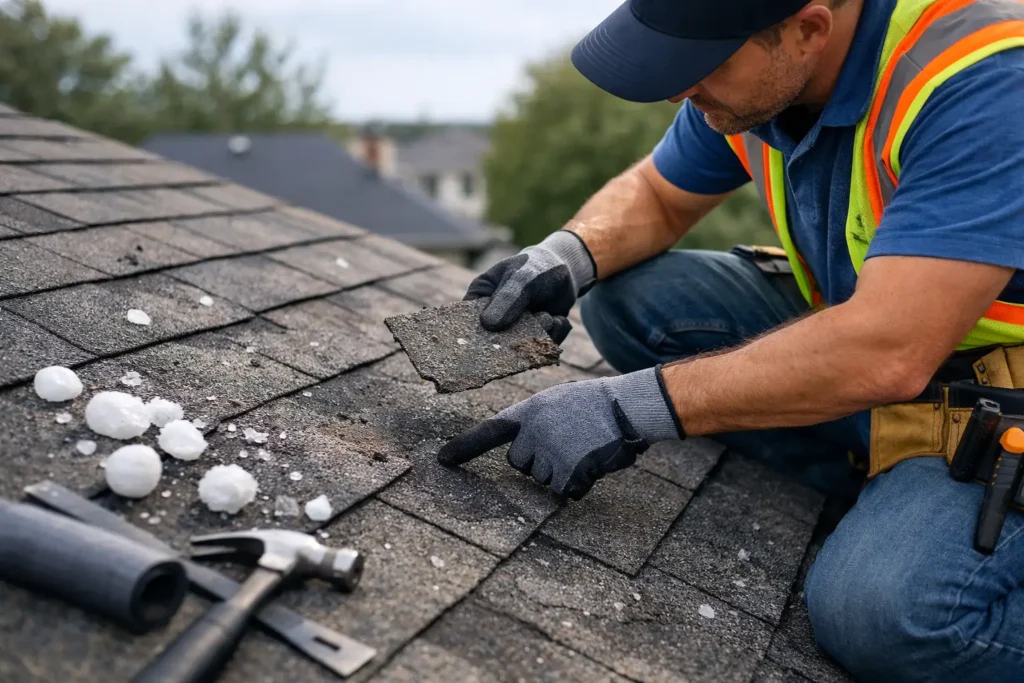
A hailstorm can be over in twenty minutes and still leave you with years of avoidable roof trouble. In Southern Alberta, that is not an exaggeration. Roof repair after hail damage is often less about what you can see from the driveway and more about the smaller impacts that weaken shingles, loosen flashing, and open the door to leaks later on.
That is why the first step is not panic and it is not guessing. It is getting a clear look at what actually happened to your roof and acting before minor damage turns into interior repairs, mold, or premature roof failure.
Why hail damage is easy to underestimate
After a storm, most homeowners look for the obvious signs first. Maybe a few granules are sitting in the eavestroughs, a downspout is dented, or a section of shingles looks slightly darker than the rest. Sometimes there are no dramatic signs at all, which is exactly what makes hail damage tricky.
Hail does not need to punch a hole through the roof to cause a problem. On asphalt shingles, repeated impacts can bruise the mat beneath the granule surface. That weakens the shingle’s ability to shed water and handle future temperature swings. On metal roofing, hail may leave cosmetic dents without affecting performance, but in other cases impact points can stress seams, fasteners, or exposed finishes.
The age of the roof matters too. A newer roofing system may withstand a storm with minimal repair needs, while an older roof can suffer broader damage from the same hail event. The size of the hail, wind direction, roof slope, and even surrounding trees all affect the final outcome. That is why a real inspection matters more than a quick glance from the ground.
Roof repair after hail damage starts with a proper inspection
If your area has just gone through a hailstorm, timing matters. You do not need to climb onto the roof yourself, and in many cases you should not. Wet surfaces, hidden soft spots, and steep slopes make post-storm roofs dangerous.
A professional inspection typically looks beyond the field of shingles. The roof system includes flashing around vents and chimneys, ridge caps, valleys, sealants, roof penetrations, gutters, soffit, fascia, and sometimes siding or other exterior surfaces that were hit by the same storm. Hail often leaves a pattern across the home, and that broader pattern helps confirm the extent and direction of the damage.
Good contractors do not just point out impacts. They explain what is cosmetic, what is functional, and what needs immediate attention. That distinction matters because not every mark on a roof means a full replacement, and not every small crack should be ignored.
What can actually be repaired?
Homeowners often ask a fair question right away: do we need a repair, or do we need a new roof?
The answer depends on the material, the age of the roof, and how concentrated the damage is. If hail damage is limited to one area and the rest of the roofing system is in solid condition, a targeted repair may be the right move. That can include replacing damaged shingles, resealing flashing, addressing punctures, or correcting vulnerable sections before water gets in.
If the storm damage is widespread, the roof is already nearing the end of its service life, or matching materials are no longer available, repairs can become a short-term patch instead of a lasting solution. In those cases, replacement may offer better value over time, especially when you factor in recurring repair costs and the risk of hidden moisture intrusion.
This is where honest guidance matters. Homeowners deserve a recommendation based on the roof’s condition, not a sales script. A good contractor should be able to explain why a repair is enough or why it is not.
Signs you should not wait
Some hail damage can sit quietly for a while before turning into a bigger issue. Still, there are a few warning signs that tell you the roof needs attention sooner rather than later.
If you notice water stains on ceilings, damp insulation in the attic, shingle pieces on the ground, visible dents around roof penetrations, or granule loss collecting heavily in gutters, do not assume it will hold until next season. Even small openings can let in moisture during the next rain or wind event.
Southern Alberta weather does not always give homeowners a long grace period. A roof that took a hit in one storm may face another round of high wind, driving rain, or sharp temperature changes shortly after. Waiting can turn a manageable repair into interior damage, wood rot, or broader exterior work.
The insurance question
For many homeowners, hail damage also raises the question of insurance. While every policy is different, documentation is usually critical. That starts with identifying the storm date if possible, recording visible signs of damage, and getting a professional assessment.
A contractor with experience in storm-related work can often help homeowners understand the repair scope clearly so they are better prepared for conversations with their insurer. That does not mean every claim leads to a full roof replacement, and it should not. Sometimes the most responsible path is a focused repair that restores the roof properly.
What matters most is accuracy. Overstating damage creates problems, but understating it can leave the homeowner paying later for issues that should have been addressed early. Clear photos, written findings, and straightforward recommendations go a long way.
Why repair quality matters more than speed
After a hailstorm, many homeowners feel pressure to get something done fast. That is understandable. The concern is real, and no one wants to leave their home exposed. But fast and rushed are not the same thing.
A quality roof repair should address the damaged area and protect the surrounding system. That means matching materials as closely as possible, checking nearby shingles for compromised seal strips, confirming flashing integrity, and making sure water will still drain correctly across the repaired section. A patch that looks fine from the lawn can still fail if the underlying details were skipped.
This is also where local experience matters. Contractors who work in Lethbridge and Southern Alberta understand how hail damage interacts with our wind, freeze-thaw cycles, and seasonal weather swings. Repairs need to hold up under real conditions, not just look acceptable the day the crew leaves.
Hail damage is not always limited to the roof
When hail hits hard enough to damage roofing, it often affects other exterior systems too. Gutters can dent or loosen. Soffit and fascia can take direct impact. Siding may crack or show visible marks. Even if the roof is the main concern, it makes sense to assess the full exterior after a major storm.
That broader view helps homeowners make smarter decisions. If multiple components were damaged at once, planning repairs together can improve both protection and curb appeal. It can also help avoid the frustration of fixing one area now and discovering another vulnerable area later.
For homeowners thinking long term, storm recovery can also be the right time to consider whether the current materials still match the home’s needs. In some cases, upgrading to more durable roofing or coordinating roof work with gutter or exterior improvements offers better long-term value than handling each issue separately.
Choosing the right contractor for roof repair after hail damage
Storm season tends to attract urgency, and urgency can attract poor workmanship. Homeowners should be cautious about anyone who offers a quick fix without a real inspection, pressures for immediate decisions, or promises a one-size-fits-all answer.
A dependable contractor should communicate clearly, explain findings in plain language, and outline whether repair or replacement makes the most sense. You should know what materials are being used, what area is being repaired, and what outcome to expect. Free estimates are helpful, but honest assessment is what really protects the homeowner.
At HighLow Roofing & Exteriors, that practical approach is part of the job. Homeowners need clear answers, durable work, and a contractor who treats the home like an investment worth protecting.
What to do right after a hailstorm
If you suspect damage, start with a visual check from the ground. Look for dented metal components, debris, downspout damage, or shingle fragments. Inside the home, check the attic and upper ceilings for moisture marks or new discoloration.
Then schedule a professional inspection. If there is an active leak, temporary protection may be needed first, but the goal should still be a full assessment of the roofing system and any related exterior damage. The sooner the condition is documented, the easier it is to make a sound repair plan.
A roof does not have to be torn open to be compromised. Hail often leaves behind damage that waits for the next storm to make itself known. Taking action early gives you more options, better protection, and a better chance of solving the problem once instead of revisiting it again and again.
A good repair does more than fix a storm mark. It restores confidence every time the weather turns.